


A Guide to Selecting CAD/CAM Software and Improving CNC Programming Efficiency
2026-08-25
Introduction
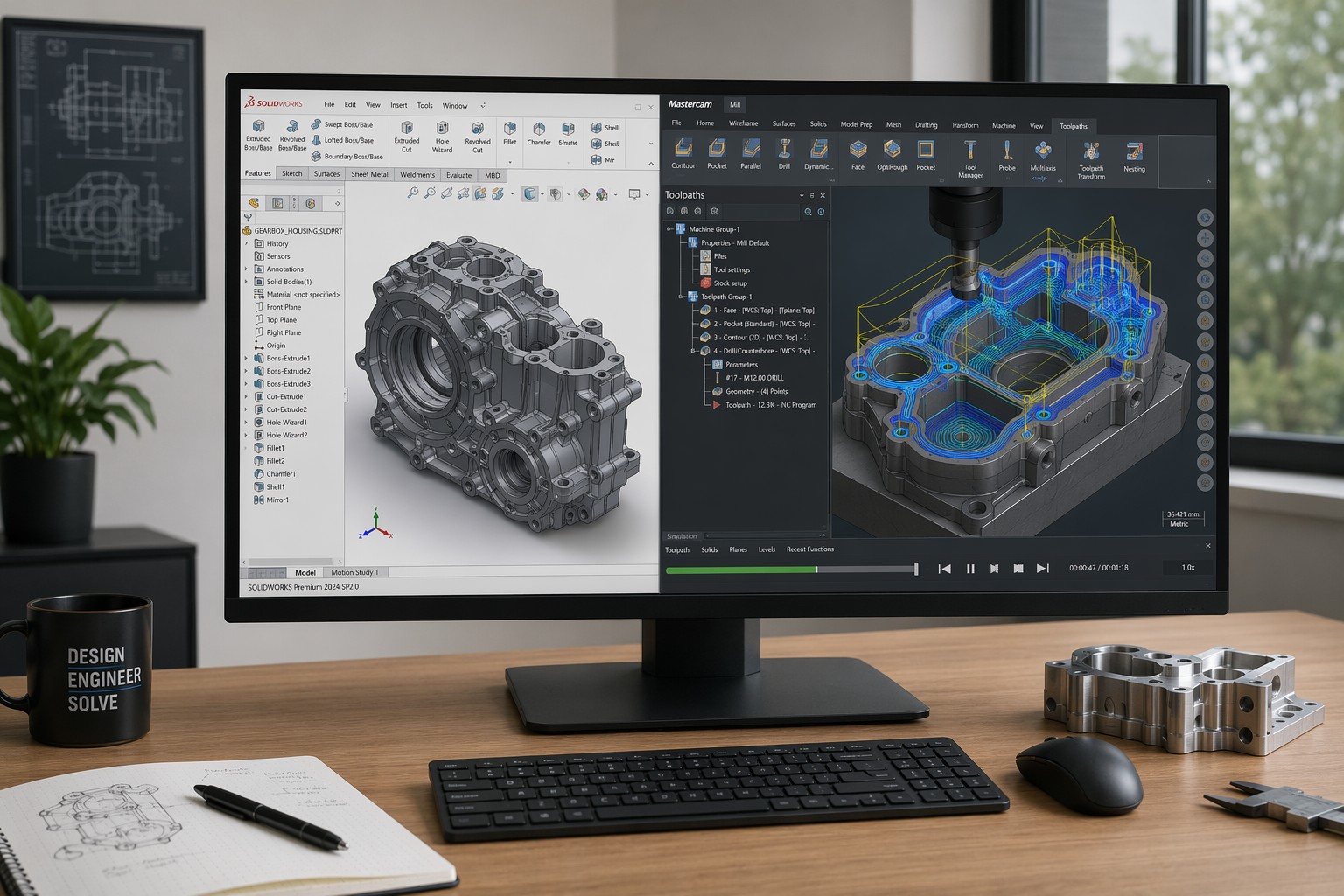
In the era of digital manufacturing, CAD (design) and CAM (manufacturing) software has become the heart of CNC machining. Choosing the right CAD/CAM system not only reduces programming time, but also allows you to make the most of the capabilities of expensive equipment. This article provides a practical guide to software selection and outlines key strategies for increasing programming efficiency.
1. Analysis of the main camps of CAM systems
The major CAM systems on the market have their strengths; enterprises should choose them based on their objectives:
- Universal (Mastercam, Fusion 360): Easy to learn, have a huge community of users, suitable for small and medium-sized businesses and processing of typical parts.
- High-level multi-axis (NX, hyperMILL, PowerMill): They have absolute advantages in 5-axis continuous machining, making impellers, blades and complex molds.
- Specialized: Professional software optimized for specific industries (dentistry, woodworking, stone processing).
2. Five criteria for choosing software
- Postprocessor capabilities: This is the most important link. If the software cannot generate the exact code for your specific machine (for example, Fanuc or Siemens systems), then even the most powerful functionality will be useless.
- Simulation and verification: Does the program have a built-in simulation of the machine model? This prevents collisions on real expensive hardware.
- Technical support and training: Having quality local technical support will help your team get through the learning curve quickly.
- Integration: Are CAD and CAM on the same platform? Seamless integration eliminates the need for reprogramming when the model changes.
- Cost and return on investment (ROI): Evaluate not only the purchase price, but also whether the efficiency gains will cover these costs.
3. How to improve the efficiency of CNC programming?
- Feature-Based Machining: Use software to automatically recognize holes, slots and planes to generate toolpaths with one click.
- Creation of technological templates: Saving proven technical processes (tool libraries, cutting modes) in the form of templates. For similar parts, simply import the model.
- Automated programming and macros: Development of special macros for serial products with a similar structure.
- Cloud interaction: The use of cloud platforms allows designers and technologists to simultaneously view and modify models.
4. The importance of post processor settings
Post-processing is the process of converting an intermediate CAM toolpath file into machine-readable “G-code.”
- Customization: A quality post-processor can include automatic tool change strategies, intelligent coolant management and specific cycles, which reduces the risk of errors when manually editing code.
Conclusion
A CAD/CAM system is not just a drawing tool, but a productivity multiplier. When choosing software, be sure to conduct a comprehensive assessment based on the capabilities of your machine and the complexity of the products. Dalian R&C Machinery works closely with many leading CAD/CAM suppliers, allowing us to provide complete post-processing and technical training solutions for your equipment.
Пожалуйста, оставьте нам сообщение
-


-


-


-


QR code for DRC business consultation on WeChat
